
Gugu Nonjinge’s recent Daily Maverick article – Beyond the bootstrap narrative: Reframing youth entrepreneurship in SA as a social justice imperative – makes an important point. South Africa cannot workshop or incubate its way out of youth unemployment if the systems that shape opportunity remain fundamentally unequal. She is right to challenge the narrative that entrepreneurship alone can compensate for decades of structural exclusion.
And, there is another question we must ask.
What happens to the thousands of young people while we rebuild those systems?
Structural reform is essential. It is also slow. Procurement reform, education reform, infrastructure investment, financial inclusion and spatial transformation will take years, perhaps decades, to realise their full impact. Young people, however, do not have the luxury of putting their lives on hold while we wait for those changes to unfold.
Every year that a young person spends outside the economy carries a cost that extends far beyond lost income: confidence erodes; learning stagnates; professional networks never form, and hope begins to give way to resignation. Long-term unemployment is not simply an economic statistic; it is a human one.
That is why South Africa’s challenge is not choosing between fixing systems or creating opportunities today. We must do both.
The national conversation often swings between two extremes. On one side is the belief that individuals simply need more resilience, more grit or more entrepreneurial spirit. On the other is the argument that nothing meaningful can happen until structural inequality is dismantled.
Reality lies somewhere in the middle.
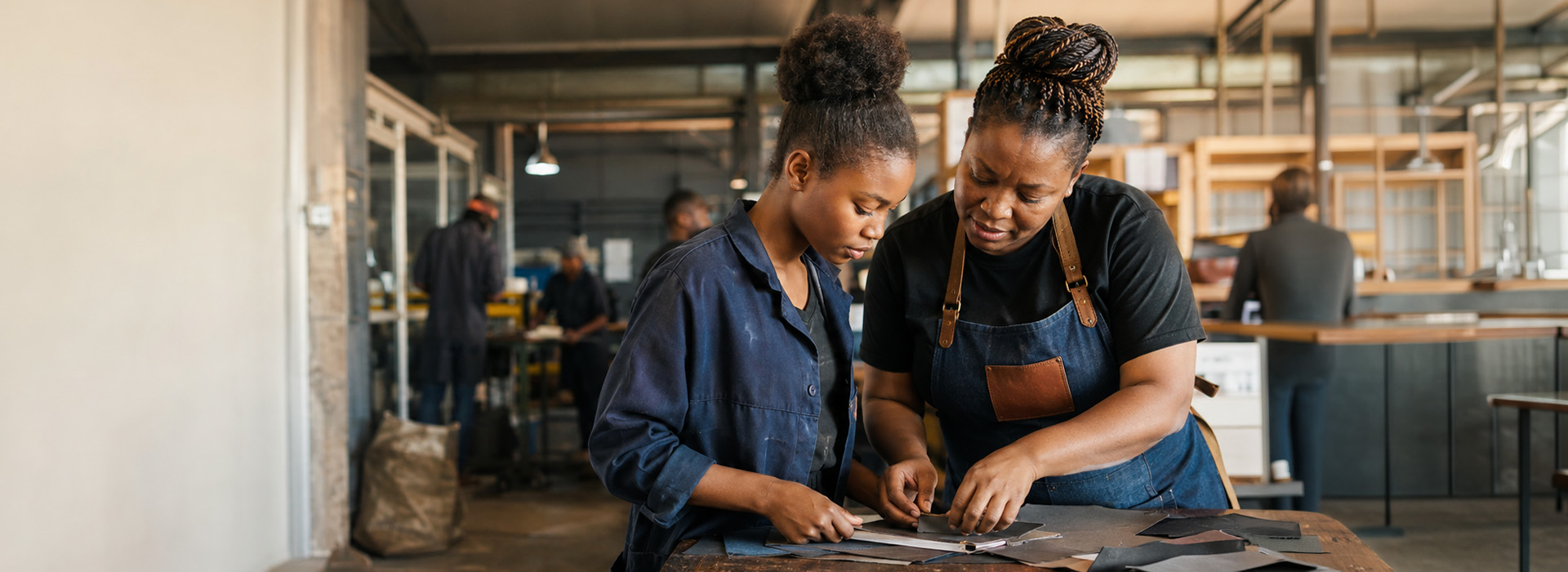
At youth@WORK, we have seen what happens when a young person is given meaningful workplace experience. The first job is rarely just a job. It becomes a place where confidence is rebuilt, professional behaviours are learned, relationships are formed and future opportunities begin to emerge. A supervisor becomes a mentor, a reference opens another door and a twelve-month placement becomes permanent employment or provides the credibility needed for the next opportunity.
Work is where people become economically connected.
This distinction matters because we often reduce employment to a salary. In truth, employment is also about belonging. It is where young people develop the social capital, confidence and experience that many employers value just as highly as formal qualifications.
That is why programmes that connect young people to real workplaces should never be viewed as substitutes for structural reform. They are bridges.
And bridges matter because they help people cross the divide while larger systems are being rebuilt.
Equally important is recognising where many of these opportunities come from. South Africa often looks to large corporations to solve youth unemployment, yet thousands of small enterprises quietly create meaningful pathways into work every day. An entrepreneur who employs one young person may not make national headlines, but collectively these businesses form one of the country’s most significant engines of inclusion.
When supported appropriately, small businesses introduce young people to customers, suppliers, technologies and professional networks that would otherwise remain inaccessible. They become part of an ecosystem that extends opportunity beyond the walls of any single business.
This is where our thinking needs to evolve.
Success cannot only be measured by the number of workshops delivered or business plans written. Nor can it only be measured by the pace of policy reform. These are not competing objectives, they reinforce one another.
South Africa still needs structural reform that expands access to finance, transforms procurement, strengthens township economies and addresses the enduring spatial inequalities that continue to shape opportunity. Those conversations are both necessary and urgent.
But while we pursue those reforms, we cannot afford to leave another generation waiting outside the economy.
Perhaps the real challenge is ensuring that every opportunity created today contributes to the more inclusive economy we want tomorrow.
Because system change, more often, it begins with someone’s first day at work.